Introduction
Biological cells are the prototypical example of active matter. Cells are actively driven agents that transduct free energy from their environment. These agents can sense and respond to mechanical, chemical and electrical environmental stimuli with a range of behaviors, including dynamic changes in morphology and mechanical properties, chemical uptake and secretion, cell differentiation, proliferation, death, and migration. One of the greatest challenges of quantitatively modeling cells is that descriptions of their dynamics and behaviors typically cannot be derived from first principles. Rather, their observed behaviors are typically described phenomenologically or empirically. Thus, those who explore the properties of cells and processes of subcellular, cellular and tissue dynamics require an extreme degree of flexibility to propose different kinds of interactions at various scales and test them in virtual experiments.
The need for extreme flexibility of model implementation and simulation presents a significant challenge to the development of a modeling and simulation environment. As a simulation environment simplifies the process of writing and simulating models (e.g., without resorting to hard-coding and building C++ or FORTRAN), the level of flexibility in writing and simulating a model tends to decrease. For example, if a user wants to write a standard molecular dynamics model, there are many excellents choices of simulation engines available, and these kinds of models can easily be specified by human readable configuration files. However, when an interaction is not well standardized or formalized (e.g., those of cells, organelles and biomolecules), the user is almost always left to hard-coding and building custom software, thus eliminating the value of the simplified simulation interface.
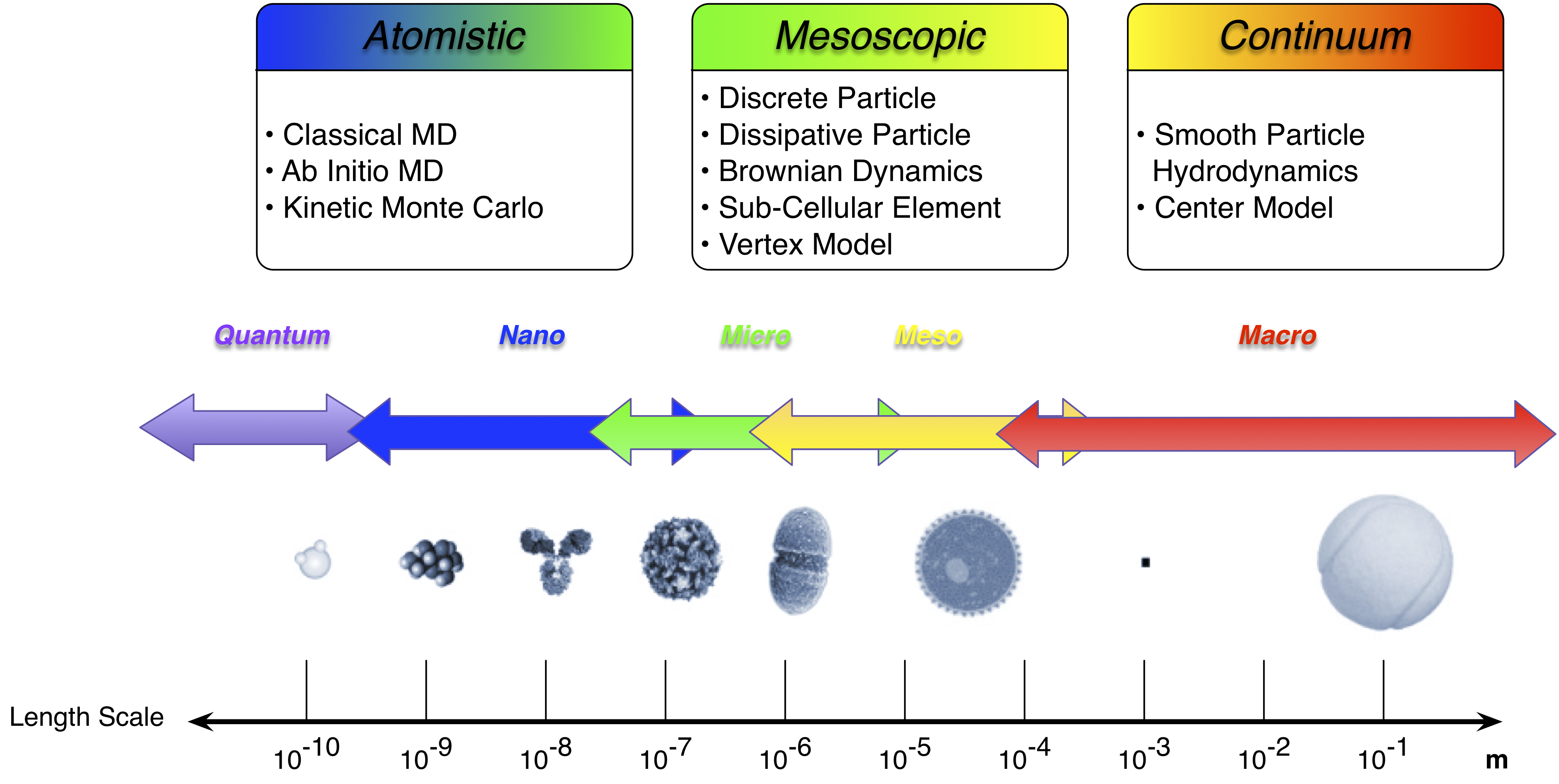
Fig. 1 Particle Dynamics enables modeling a wide range of length scales
The goal of the Mechanica project is to deliver a modeling and simulation framework that lets users from all relevant backgrounds interactively create, simulate and explore models at biologically relevant length scales. We believe that accessible and interactive modeling and simulation is key to increasing scientific productivity, much like how modeling environments have revolutionized many fields of modern engineering.
We thus present Mechanica, an interactive modeling and simulation environment based on an off-lattice formalism that seeks to allow users to create models for a wide range of biologically relevant problems using any combination of the following modeling methodologies:
Coarse Grained Molecular Dynamics
Discrete Element Method (DEM). DEM particles add rotational degrees-of-freedom as well as stateful contact and often complicated geometries (including polyhedra).
Dissipative Particle Dynamics (DPD). A particle-based method, where particles represent whole molecules or fluid regions rather than single atoms, and atomistic details are not considered relevant to the processes addressed. The particles’ internal degrees of freedom are averaged out and represented by simplified pairwise dissipative and random forces, so as to conserve momentum locally and ensure correct hydrodynamic behavior. DPD allows much longer time and length scales than are possible using conventional MD simulations.
Sub-Cellular Element (SCM). Frequently used to model complex sub-cellular active mechanics. SCM is similar to DPD, where each particle represents a region of space and is governed by empirically derived potentials, but adds active response.
Smoothed particle hydrodynamics (SPH). A particle method very similar to DPD and frequently used to model complex fluid flows, especially large fluid deformations, fluid-solid interactions, and multi-scale physics.
Reactive Molecular Dynamics. In RMD, particles react with other particles and form new molecules, and can absorb or emit energy into their environment. Mechanica is designed to support reactive particles, as one of our main goals is very efficient particle creation and deletion. Very few classical molecular dynamics packages support reactive MD, as they are almost all highly optimized towards conserved number of particles.
Flux Networks. The concept of a flux is extremly general, and this lets us define a connector type that lets users connect different model elements. Flux networks allow us to define a wide range of problems, from biological fluid flow in areas like the liver and the eye, to physiologically based pharmacokinetic (PBPK) modeling, and even to electric circuits and pipe flow networks.
Reaction Diffusion. Mechanica allows users to attach a chemical cargo to each particle, host a chemical reaction network at each particle, and transport between particles.
Event-based modeling. Mechanica supports attaching custom handlers of a variety of different events that particles (or other objects) can emit. Therefore, Mechanica also supports developing full Transport Dissipative Particle Dynamics simulations.
Warning
Only a subset of these features are presently available. We encourage users to contact us about what features would best benefit your specific problem. Please contact us at <mechanicasim@gmail.com> or raise an issue on the Mechanica repository.
As development of Mechanica progresses, existing Vertex Model capabilities will also be introduced into Mechancia. Vertex Model is another specialized form of classical Molecular Dynamics, but with instead of the traditional bonded relationships of bonds, angles, dihedrals, impropers, Vertex Models add some new kinds of bonded relationships such as polygons and volumes to represent surface and volume forces.
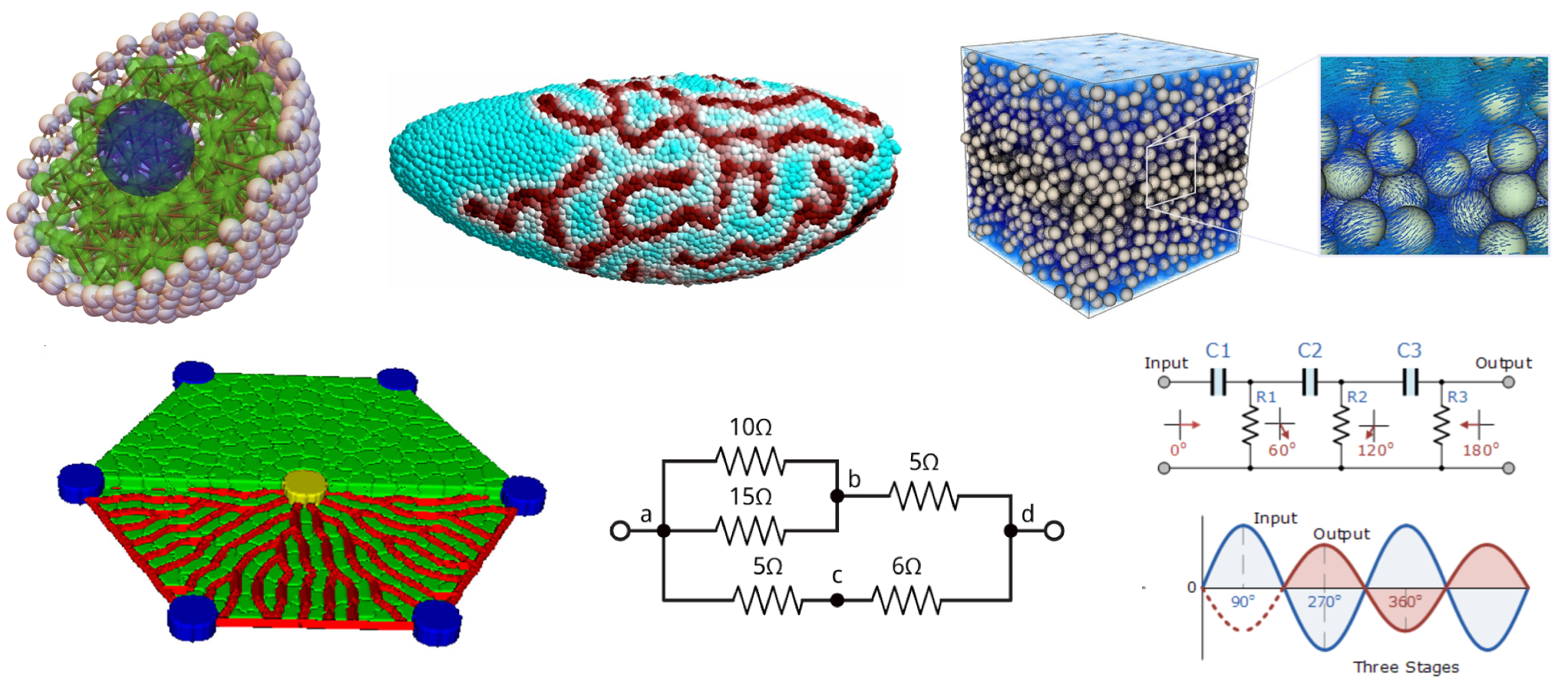
Fig. 2 The kinds of modeling and simulation problems Mechanica is designed to enable.